I'm still exploring the local H Mart's variety of foods for work lunches. The only requirement being minimal prep, as our office lacks a real kitchen.
Last week, I bought tobiko, aka flying fish roe. It was a random purchase- I like salmon roe much better, but it was exponentially more expensive, and I wondered if it would dry out faster due to the larger egg surface area.
So I was left with these weird little fish eggs. In a late-night moment of craziness, I smeared them all over a bagel with cream cheese. And it was pretty tasty, about as good as lox spread, but a little more subtle. I also dipped asparagus spears into cream cheese, then the roe. That technique emphasizes the roe's almost crunchy texture, and is a great rice-less take on contemporary sushi.
Then this morning, I woke up craving rye crepes.
And that's how tobiko blini was born.
The nutty rye flour balanced well with tangy creme fraiche and the sweet, salty roe. Not bad at all. My next project is going to be soft-scrambling eggs with the tobiko. I've seen stir-fry recipes involving tobiko, so it's not that crazy to cook it.
Showing posts with label odd ingredient du jour. Show all posts
Friday, March 30, 2012
Monday, January 23, 2012
Odd Ingredient du Jour: Lard
So, for someone who likes food a whole lot, I'm not really into the Cult of Pig that's hit the food world in the last few years. I like my jamón, I like proscuitto di San Daniele, I madly love these people. But I maybe cook bacon once a year. It's ok, but I could take it or leave it. Especially since lamb bacon is way tastier.
In any case, Jon decided to cook traditional Hungarian goulash last night. The recipe called for the meat to be browned in a few tablespoons of lard or shortening, and we had neither. The sensible thing would've been to buy that scary shelf-stabilized lard, or to buy a can of Crisco, or just use butter or oil. Or maybe even to head to the Dupont Farmers' Market and hope Red Apron Butcher had some posh lard on hand. Me being me, however, this went in a different direction.
That's two or three pounds of fat, skin, and god-knows-what the local Whole Foods nicely scraped up for me from their butchering remnants.
I knew my kindred spirit Chichi Wang over at Serious Eats had done a tutorial on rendering lard a few years back, so I figured it was manageable enough. Of course, I wasn't starting with a nice, pretty chunk of leaf lard, so I just loosely followed her procedure and hoped for the best.
First, I chopped that pile of pig into approximately 1" chunks. Next time, I'd dice them to get a faster render and maybe even some useful cracklins. The fat was still pretty cold from the butcher's cooler, but if I were dicing, I'd probably pop them in the freezer for awhile to make the process easier and less messy.
Then I tossed them in my large (4 quart?) dutch oven, and added 1/4 cup of water. The water's just there to help the fat evenly heat, and to prevent scorching at the beginning.
The tutorial says to start it over very low heat, covered, for the first ten minutes. Presumably this is to help it heat up quickly and evenly, but mine was over such low heat (stupid new apartment burners) that nothing really happened. I removed the lid and kept heating, stirring regularly.
10 minutes.
15 minutes.
20 minutes.
75 minutes.
105 minutes.
The whole process seemed to take forever. Especially between the 20 and 75 minute photos, change was very incremental and slow, to the degree I wondered if it was working at all. The important thing to remember is very low heat, at least until it has mostly melted. This yields a nice golden fat, without browning or developing off-flavors.
I quit at about two hours, though I could've gone longer and maybe yielded some cracklins. At that point, I (precariously) tipped everything through a mesh strainer into a measuring cup, then into jars for storage.
It's unfortunately a messy business.
It cooled to a nice creamy white, and made Jon's goulash extra-delicious. Now I just need to figure out what to do with the rest of it...
In any case, Jon decided to cook traditional Hungarian goulash last night. The recipe called for the meat to be browned in a few tablespoons of lard or shortening, and we had neither. The sensible thing would've been to buy that scary shelf-stabilized lard, or to buy a can of Crisco, or just use butter or oil. Or maybe even to head to the Dupont Farmers' Market and hope Red Apron Butcher had some posh lard on hand. Me being me, however, this went in a different direction.
That's two or three pounds of fat, skin, and god-knows-what the local Whole Foods nicely scraped up for me from their butchering remnants.
I knew my kindred spirit Chichi Wang over at Serious Eats had done a tutorial on rendering lard a few years back, so I figured it was manageable enough. Of course, I wasn't starting with a nice, pretty chunk of leaf lard, so I just loosely followed her procedure and hoped for the best.
First, I chopped that pile of pig into approximately 1" chunks. Next time, I'd dice them to get a faster render and maybe even some useful cracklins. The fat was still pretty cold from the butcher's cooler, but if I were dicing, I'd probably pop them in the freezer for awhile to make the process easier and less messy.
Then I tossed them in my large (4 quart?) dutch oven, and added 1/4 cup of water. The water's just there to help the fat evenly heat, and to prevent scorching at the beginning.
The tutorial says to start it over very low heat, covered, for the first ten minutes. Presumably this is to help it heat up quickly and evenly, but mine was over such low heat (stupid new apartment burners) that nothing really happened. I removed the lid and kept heating, stirring regularly.
10 minutes.
15 minutes.
20 minutes.
75 minutes.
105 minutes.
The whole process seemed to take forever. Especially between the 20 and 75 minute photos, change was very incremental and slow, to the degree I wondered if it was working at all. The important thing to remember is very low heat, at least until it has mostly melted. This yields a nice golden fat, without browning or developing off-flavors.
I quit at about two hours, though I could've gone longer and maybe yielded some cracklins. At that point, I (precariously) tipped everything through a mesh strainer into a measuring cup, then into jars for storage.
It's unfortunately a messy business.
It cooled to a nice creamy white, and made Jon's goulash extra-delicious. Now I just need to figure out what to do with the rest of it...
Tuesday, December 6, 2011
Odd Ingredient du Jour: Rennet
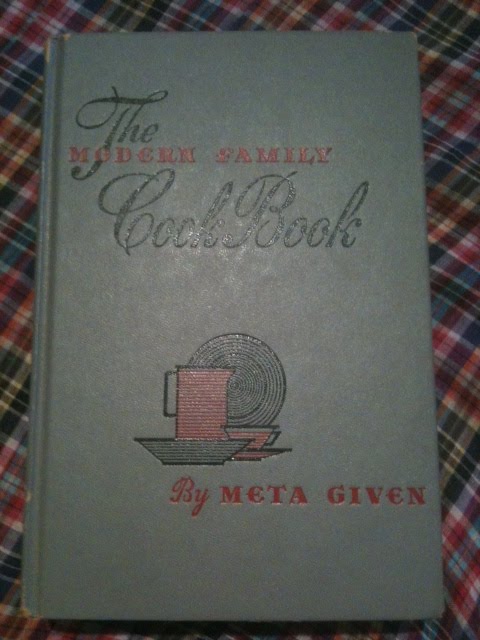
I am fascinated by rennet. I was first intrigued by its presence in my favorite vintage cookbook (of which I actually have two copies- 1943 and 1953).
The '53 version has the prettier cover.
I love Meta Given's voice. The cookbook has a ton of personality, heavily influenced by the early/mid twentieth century research on the new science of nutrition, Home Economics, and yes, the U.S. Government's recommendations, with a surprising dose of feminism. If you can't make it to What's Cooking, Uncle Sam?, this book pretty much captures everything you'd see there.
By the way, what is rennet ? It's a collection of enzymes used to coagulate milk proteins. The sources are unappealing- either derived from the lining of a calf's stomach, from microbial sources (mostly molds), or from bacteria genetically modified to produce the proper enzymes. Frankly, given those choices, I'll stick with baby cow stomach (sorry, cows).
Most people think of rennet as cheese-related, because that's primarily what we use it for today. The Modern Family Cookbook, on the other hand, mentions rennet primarily in the context of puddings. I found it intriguing, and a little odd. But, being an inveterate pudding-lover, I had to try it.
(Those are vanilla beans. Yes they look icky.)
Rennet puddings are super-easy to make. We all know I'm pudding-impaired, so that's saying something. This is a vanilla pudding I made last night, following a recipe that came with the rennet tablets. It was written by the homemade cheese guru Dr. Fankhauser. Interesting that the pudding recipes aren't even on his recipe page online.
Perhaps this is why.
The texture is not very appealing. It's somewhere between soft-boiled egg whites and yogurt, and rather confusing to eat. The above photo was taken after chilling the custard for two or three hours. After five hours, it had firmed up somewhat, holding its shape about as well as an egg custard:
I'm curious to try more rennet pudding recipes. Maybe next time with whole milk for better flavor. I'd definitely recommend using rennet if you're going for an egg custard feel, but can't use eggs. It's also way, way, way simpler to make than an egg custard- for this recipe, I heated milk, sugar, and a vanilla bean to lukewarm; added a dissolved rennet tablet, and chilled. That's all.
The '53 version has the prettier cover.
I love Meta Given's voice. The cookbook has a ton of personality, heavily influenced by the early/mid twentieth century research on the new science of nutrition, Home Economics, and yes, the U.S. Government's recommendations, with a surprising dose of feminism. If you can't make it to What's Cooking, Uncle Sam?, this book pretty much captures everything you'd see there.
By the way, what is rennet ? It's a collection of enzymes used to coagulate milk proteins. The sources are unappealing- either derived from the lining of a calf's stomach, from microbial sources (mostly molds), or from bacteria genetically modified to produce the proper enzymes. Frankly, given those choices, I'll stick with baby cow stomach (sorry, cows).
Most people think of rennet as cheese-related, because that's primarily what we use it for today. The Modern Family Cookbook, on the other hand, mentions rennet primarily in the context of puddings. I found it intriguing, and a little odd. But, being an inveterate pudding-lover, I had to try it.
(Those are vanilla beans. Yes they look icky.)
Rennet puddings are super-easy to make. We all know I'm pudding-impaired, so that's saying something. This is a vanilla pudding I made last night, following a recipe that came with the rennet tablets. It was written by the homemade cheese guru Dr. Fankhauser. Interesting that the pudding recipes aren't even on his recipe page online.
Perhaps this is why.
The texture is not very appealing. It's somewhere between soft-boiled egg whites and yogurt, and rather confusing to eat. The above photo was taken after chilling the custard for two or three hours. After five hours, it had firmed up somewhat, holding its shape about as well as an egg custard:
I'm curious to try more rennet pudding recipes. Maybe next time with whole milk for better flavor. I'd definitely recommend using rennet if you're going for an egg custard feel, but can't use eggs. It's also way, way, way simpler to make than an egg custard- for this recipe, I heated milk, sugar, and a vanilla bean to lukewarm; added a dissolved rennet tablet, and chilled. That's all.
Thursday, October 20, 2011
Odd Ingredient du Jour: Ginkgo Nuts
First, a little botany lesson. Because I love ginkgo trees.
Their leaves are so pretty!
Ginkgo trees are classified as gymnosperms, which is the older method of seed-bearing among plants. Conifers are another common example (I'll refrain from geeking out about the cycads...just know that you never want to hit the botanic gardens with me).
Basically, it means their seeds aren't enclosed inside a flower, and instead are in cones or exposed on short stalks. And it means ginkgo trees are extremely ancient. That "living fossil" stuff biology teachers get excited about? That's the ginkgo.
More ginkgo porn. So pretty.
People have been noshing ginkgo biloba seeds for a long time, particularly in Asia. And it just so happens that the DC area is full of ginkgo trees, and that fruiting season is right now. In addition to the pretty leaves, you'll know these trees by the foul odor emanating from the sidewalk, and the squashed orange goo everywhere. Yes, the fruit reeks. But it's also a nice glowy orange color, and adorably wrinkled.
Naturally, I have some around the corner from my house in their full reeky glory. So I had to investigate. I just foraged them from the ground, because the putrescent flesh isn't what we're after anyway.
At this point, I had to consult the internets for advice, having neither tasted ginkgo nuts before nor any idea what to do with them. Instructables to the rescue!
Following the tutorial's advice, I soaked the fruit for an hour in warm water, then removed the seeds. (Also do be aware that ginkgo fruit technically contains urushiol, aka the chemical that puts the "poison" in poison ivy. I've never had issues, but if you're paranoid/sensitive/not a risk-taker, glove up)
This is what they look like, de-fruited.
I wanted to consume them right away, so I skipped ahead to roasting them in the oven. I cooked them at 400 degrees for just over ten minutes, not quite sure how to tell if they were done, because the outer shell does not turn green, just the inner meat. The explosion solved my little dilemma.
Seriously, if you want to scare someone, explode some ginkgo seeds in their oven. It sounded like a cannon went off in there. Maybe I'd try a lower heat next time, but the survivors were indeed done.
They look like slightly translucent olives when cooked and peeled.
And the taste? That was what I was most curious about, since most people dislike them or claim they're an acquired taste. The short version would be "they taste like buckwheat-flavored jelly beans". But they're actually pretty complex- kind of woodsy and earthy, with an odd chewiness. The second one I ate was significantly more bitter than the first, but there's a touch of bitterness to all of them. On top of all that, the toasty buckwheat flavors resound most prominently.
I'm not sure what to do with them next. Most recipes I see them in are very strange to the western palate- congee, eggy savory custards, and the like. I'm going to think about it and hopefully come up with something good. The flavor is unique enough make all the effort worthwhile at least a few times each year.
Their leaves are so pretty!
Ginkgo trees are classified as gymnosperms, which is the older method of seed-bearing among plants. Conifers are another common example (I'll refrain from geeking out about the cycads...just know that you never want to hit the botanic gardens with me).
Basically, it means their seeds aren't enclosed inside a flower, and instead are in cones or exposed on short stalks. And it means ginkgo trees are extremely ancient. That "living fossil" stuff biology teachers get excited about? That's the ginkgo.
More ginkgo porn. So pretty.
People have been noshing ginkgo biloba seeds for a long time, particularly in Asia. And it just so happens that the DC area is full of ginkgo trees, and that fruiting season is right now. In addition to the pretty leaves, you'll know these trees by the foul odor emanating from the sidewalk, and the squashed orange goo everywhere. Yes, the fruit reeks. But it's also a nice glowy orange color, and adorably wrinkled.
Naturally, I have some around the corner from my house in their full reeky glory. So I had to investigate. I just foraged them from the ground, because the putrescent flesh isn't what we're after anyway.
At this point, I had to consult the internets for advice, having neither tasted ginkgo nuts before nor any idea what to do with them. Instructables to the rescue!
Following the tutorial's advice, I soaked the fruit for an hour in warm water, then removed the seeds. (Also do be aware that ginkgo fruit technically contains urushiol, aka the chemical that puts the "poison" in poison ivy. I've never had issues, but if you're paranoid/sensitive/not a risk-taker, glove up)
This is what they look like, de-fruited.
I wanted to consume them right away, so I skipped ahead to roasting them in the oven. I cooked them at 400 degrees for just over ten minutes, not quite sure how to tell if they were done, because the outer shell does not turn green, just the inner meat. The explosion solved my little dilemma.
Seriously, if you want to scare someone, explode some ginkgo seeds in their oven. It sounded like a cannon went off in there. Maybe I'd try a lower heat next time, but the survivors were indeed done.
They look like slightly translucent olives when cooked and peeled.
And the taste? That was what I was most curious about, since most people dislike them or claim they're an acquired taste. The short version would be "they taste like buckwheat-flavored jelly beans". But they're actually pretty complex- kind of woodsy and earthy, with an odd chewiness. The second one I ate was significantly more bitter than the first, but there's a touch of bitterness to all of them. On top of all that, the toasty buckwheat flavors resound most prominently.
I'm not sure what to do with them next. Most recipes I see them in are very strange to the western palate- congee, eggy savory custards, and the like. I'm going to think about it and hopefully come up with something good. The flavor is unique enough make all the effort worthwhile at least a few times each year.
Monday, October 10, 2011
Odd Ingredient du Jour: Naranja Agria
With lunch ("multigrain pilaf" from Trader Joe's), I had some of this, mixed with sugar and soda water to make a tasty beverage. It's an unusual ingredient, but one I find pretty useful, so I thought I'd discuss it here.
It's mock bitter orange juice, bitter orange being an integral ingredient in many Latin American recipes. I first heard of it trying to make Rick Bayless' jicama salad in "Authentic Mexican", but it's also common in meat marinades. Real bitter orange juice comes from Seville oranges, which produce extremely sour citrus flavor (apparently it's reminiscent of grapefruit) and are generally unavailable in the U.S. Bayless suggests using a mixture of lime and grapefruit juice, in addition to orange zest, as a substitute rather than bottled mix. I did that the first time I made the jicama salad, but it was expensive and a huge hassle. Next time, I bought this huge bottle of mock bitter orange instead. It contains orange juice, Seville orange oil, grapefruit juice, and a variety of preservatives. And it's huge. I don't make nearly enough Mexican food to use up this bottle in a timely manner, so I started experimenting with it. It works well in homemade vinaigrettes, but my favorite use is cocktails and mocktails. It's extremely bitter, but flavorful and a little floral. I haven't tried making tinto de veranos* with it yet, but I bet with enough added sugar it could function as a stand-in for the orange Fanta.
(*Tinto de veranos are the best drink ever. But the Wikipedia page is kind of wrong. I lived in Spain for a summer, traveling and drinking widely, and always saw them made with orange Fanta, never with lemon soda. And definitely never with Sprite)
It's mock bitter orange juice, bitter orange being an integral ingredient in many Latin American recipes. I first heard of it trying to make Rick Bayless' jicama salad in "Authentic Mexican", but it's also common in meat marinades. Real bitter orange juice comes from Seville oranges, which produce extremely sour citrus flavor (apparently it's reminiscent of grapefruit) and are generally unavailable in the U.S. Bayless suggests using a mixture of lime and grapefruit juice, in addition to orange zest, as a substitute rather than bottled mix. I did that the first time I made the jicama salad, but it was expensive and a huge hassle. Next time, I bought this huge bottle of mock bitter orange instead. It contains orange juice, Seville orange oil, grapefruit juice, and a variety of preservatives. And it's huge. I don't make nearly enough Mexican food to use up this bottle in a timely manner, so I started experimenting with it. It works well in homemade vinaigrettes, but my favorite use is cocktails and mocktails. It's extremely bitter, but flavorful and a little floral. I haven't tried making tinto de veranos* with it yet, but I bet with enough added sugar it could function as a stand-in for the orange Fanta.
(*Tinto de veranos are the best drink ever. But the Wikipedia page is kind of wrong. I lived in Spain for a summer, traveling and drinking widely, and always saw them made with orange Fanta, never with lemon soda. And definitely never with Sprite)
Subscribe to:
Posts (Atom)