So, I have a pretty picture of chocolate-covered figs, and not a ton to talk about. Hence "impressive cooking projects". I always feel like there are certain cooking things that are extremely easy, but freak out a lot of people. Maybe I'll start a series about this?
Pretty figs:
It was sort of an outgrowth of that Valentine's Day chocolate-covered strawberry nonsense. And I always see ridiculously pricey chocolate-covered figs at Whole Foods, so I was curious to make my own.
How easy is this?
1. You melt chocolate. Well, first find chocolate. I happened to use Whole Foods' house brand of semi-sweet chocolate chips, but fancier chocolate, or milk chocolate, or whatever, works fine. Please don't use that weird "chocolate candy coating" crap. That is not chocolate. Melt it in a double boiler, if you're being proper, but going slowly and stirring a lot works fine in the microwave, too.
2. Take it off the heat, if you're not microwaving. Dip figs (or strawberries, or whatever) into the chocolate by hand, or using a fondue fork. Whatever is practical. Melt it a little more if it starts to solidify.
3. Place the dipped fruit on a sheet of waxed paper to cool at room temperature. If you're feeling a bit pretentious, melt a contrasting shade of chocolate and drizzle it over the top. Or add sea salt, chopped nuts, caramel, or whatever. Have fun.
If it's fresh fruit, ideally eat it the same day. Strawberries can start to weep. I think dried fruit will keep for a few days or longer, but they didn't last long enough for me to truly attest to that.
Sunday, February 19, 2012
Tuesday, February 14, 2012
Burmese Love
For dinner, I had Burmese food!
I went into it knowing nothing of Burmese food. Their menu turned out to be what you'd expect if you looked at a map, and are familiar with Chinese, Indian, and Thai food...sort of an assortment of those styles, with some interesting curve balls thrown in.
For example, I ended up with the above, vegetarian plate #6. "Yellow beans"? Sort of a curve ball. The textures were really interesting. It contained those flat, chewy, lightly doughy noodles often found in Thai drunken noodles (one of my own great carby weaknesses), crisp, lightly sauteed romaine hearts, crunchy bean sprouts, meaty tofu, and the aforementioned yellow beans. They were sort of garbanzo-like, if garbanzos were creamy and delicate. It appears they're a yellow pea variety, but there's not a lot of intel out there in English. Topped with a peanutty, vinegary sauce, the dish was extremely delicious.
Our appetizer, fritters made with gram (aka lentil) flour, garlic, and spices, was also pretty great. It came with a spicy chile sauce, possibly accented with fish sauce, on the side.
Dessert was a sticky rice, brown sugar, and coconut cake of sorts. The texture, cohesive and gummy, was novel, but I prefer the more intense flavors of Thai-style sticky rice with mango.
They had a ton of awesome-looking vegetarian options, and the prices are quite reasonable. Definitely our new favorite close-to-home ethnic restaurant.
I went into it knowing nothing of Burmese food. Their menu turned out to be what you'd expect if you looked at a map, and are familiar with Chinese, Indian, and Thai food...sort of an assortment of those styles, with some interesting curve balls thrown in.
For example, I ended up with the above, vegetarian plate #6. "Yellow beans"? Sort of a curve ball. The textures were really interesting. It contained those flat, chewy, lightly doughy noodles often found in Thai drunken noodles (one of my own great carby weaknesses), crisp, lightly sauteed romaine hearts, crunchy bean sprouts, meaty tofu, and the aforementioned yellow beans. They were sort of garbanzo-like, if garbanzos were creamy and delicate. It appears they're a yellow pea variety, but there's not a lot of intel out there in English. Topped with a peanutty, vinegary sauce, the dish was extremely delicious.
Our appetizer, fritters made with gram (aka lentil) flour, garlic, and spices, was also pretty great. It came with a spicy chile sauce, possibly accented with fish sauce, on the side.
Dessert was a sticky rice, brown sugar, and coconut cake of sorts. The texture, cohesive and gummy, was novel, but I prefer the more intense flavors of Thai-style sticky rice with mango.
They had a ton of awesome-looking vegetarian options, and the prices are quite reasonable. Definitely our new favorite close-to-home ethnic restaurant.
Tuesday, February 7, 2012
Kale Malfatti at Home
For dinner, I had some homemade malfatti, with a glass of primitivo.
They weren't quite as much of a pain to make as I expected. Malfatti are basically delicious little cheese blobs, often more palatably described as "ravioli without the pasta". These are from a recipe adapted from Al di La in Park Slope. I traded the chard for kale, just for fun, and idiotically forgot to buy sage. So I made a butter/shallot sauce instead. And then this happened...
Er, yeah. They are kind of spineless. I gave up and mixed it into a kale-y, cheese-y mush. Nice flavors- the nutmeg is really key- though the texture reminded me disconcertingly of salmon patties or crab cakes.
The wine was a standout, in the world of Trader-Joe's-under-$5 that I inhabit so often. Make no mistake, it's head-explodingly tannic, and quite rough around the edges. But I feel like I've been in an incredibly boring rut of malbecs lately, so it was a wonderful and jolting change.
They weren't quite as much of a pain to make as I expected. Malfatti are basically delicious little cheese blobs, often more palatably described as "ravioli without the pasta". These are from a recipe adapted from Al di La in Park Slope. I traded the chard for kale, just for fun, and idiotically forgot to buy sage. So I made a butter/shallot sauce instead. And then this happened...
Er, yeah. They are kind of spineless. I gave up and mixed it into a kale-y, cheese-y mush. Nice flavors- the nutmeg is really key- though the texture reminded me disconcertingly of salmon patties or crab cakes.
The wine was a standout, in the world of Trader-Joe's-under-$5 that I inhabit so often. Make no mistake, it's head-explodingly tannic, and quite rough around the edges. But I feel like I've been in an incredibly boring rut of malbecs lately, so it was a wonderful and jolting change.
Labels:
grifone,
malfatti,
NYT Cookbook,
primitivo,
trader joe's
Wednesday, February 1, 2012
Apple Tart at Home
For breakfast (and lunch...), I noshed on a homemade apple tart, with some jasmine green tea to drink.
I baked it yesterday, just for fun. The recipe's super-easy, even though I'd never made pâte brisée before. I like that the tart doesn't contain anything else (looking at you, cinnamon) to distract from the simple apple flavor and rich, not-too-sweet crust.
The recipe calls for individual "tartelettes", and peeled apples, which I modified for prettiness. Also, remember all that lard? Perfect for adding a little extra depth to the apples. I replaced a bit of the butter with lard in cooking the apples; if you know it's there, you'll taste it, but it didn't scream PORK!
Finally, an equipment suggestion: I do not own a pizza peel, and always mourn this fact. But I don't have the space for an adequately-sized one, and it's sort of a ridiculous purchase, unless you have a wood-fired oven or something. If I'm making pizza, I heat up the pizza stone in the oven, then pull it out and build the pizza on the warm stone. With fragile tarts, I can't do that, and transferring them can be fraught with disaster. I solved this by sprinkling a wooden cutting board with cornmeal, building the tart there, and slipping it onto the pizza stone as if it were a peel.
I baked it yesterday, just for fun. The recipe's super-easy, even though I'd never made pâte brisée before. I like that the tart doesn't contain anything else (looking at you, cinnamon) to distract from the simple apple flavor and rich, not-too-sweet crust.
The recipe calls for individual "tartelettes", and peeled apples, which I modified for prettiness. Also, remember all that lard? Perfect for adding a little extra depth to the apples. I replaced a bit of the butter with lard in cooking the apples; if you know it's there, you'll taste it, but it didn't scream PORK!
Finally, an equipment suggestion: I do not own a pizza peel, and always mourn this fact. But I don't have the space for an adequately-sized one, and it's sort of a ridiculous purchase, unless you have a wood-fired oven or something. If I'm making pizza, I heat up the pizza stone in the oven, then pull it out and build the pizza on the warm stone. With fragile tarts, I can't do that, and transferring them can be fraught with disaster. I solved this by sprinkling a wooden cutting board with cornmeal, building the tart there, and slipping it onto the pizza stone as if it were a peel.
Tuesday, January 31, 2012
Wednesday, January 25, 2012
Porridge at Home
For breakfast, I had some semolina porridge with butter, molasses, and salt, and some Earl Grey tea to drink.
I was feeling creative, I guess. It was an odd breakfast, as I'm not a huge fan of breakfast, or cereal, or hot soupy things early in the morning. And I have awful memories of my grandmother making me Cream of Wheat as a snack and me dousing it in heavy cream, butter, and brown sugar, just to make it edible.
Even the dog wanted in on this. Weirdo.
Dousing did ensue, but the result was remarkably tasty. I don't think of semolina as having much flavor, but the molasses brought out a rich, earthy quality in it, and provided contrasting mineral overtones. Sort of a non-alcoholic morning Guinness. The meal was balanced beautifully by my Earl Grey: floral black tea flavors, with a refreshingly sharp citrusy zing that prevented the porridge's creaminess from becoming boring.
One cooking note: the ratio I found everywhere online is really wrong, assuming you want porridge and not semolina-flavored water. I used less liquid than recommended (2 cups water- our milk smelled funny...) to a quarter cup semolina, and it was still quite watery after 20 minutes of cooking. Maybe it has something to do with the grind of my semolina (pretty fine), but I'd go with 1.5 cups liquid next time, or maybe even less. I didn't miss the milk, though added a few tablespoons butter to compensate.
I was feeling creative, I guess. It was an odd breakfast, as I'm not a huge fan of breakfast, or cereal, or hot soupy things early in the morning. And I have awful memories of my grandmother making me Cream of Wheat as a snack and me dousing it in heavy cream, butter, and brown sugar, just to make it edible.
Even the dog wanted in on this. Weirdo.
Dousing did ensue, but the result was remarkably tasty. I don't think of semolina as having much flavor, but the molasses brought out a rich, earthy quality in it, and provided contrasting mineral overtones. Sort of a non-alcoholic morning Guinness. The meal was balanced beautifully by my Earl Grey: floral black tea flavors, with a refreshingly sharp citrusy zing that prevented the porridge's creaminess from becoming boring.
One cooking note: the ratio I found everywhere online is really wrong, assuming you want porridge and not semolina-flavored water. I used less liquid than recommended (2 cups water- our milk smelled funny...) to a quarter cup semolina, and it was still quite watery after 20 minutes of cooking. Maybe it has something to do with the grind of my semolina (pretty fine), but I'd go with 1.5 cups liquid next time, or maybe even less. I didn't miss the milk, though added a few tablespoons butter to compensate.
Monday, January 23, 2012
Odd Ingredient du Jour: Lard
So, for someone who likes food a whole lot, I'm not really into the Cult of Pig that's hit the food world in the last few years. I like my jamón, I like proscuitto di San Daniele, I madly love these people. But I maybe cook bacon once a year. It's ok, but I could take it or leave it. Especially since lamb bacon is way tastier.
In any case, Jon decided to cook traditional Hungarian goulash last night. The recipe called for the meat to be browned in a few tablespoons of lard or shortening, and we had neither. The sensible thing would've been to buy that scary shelf-stabilized lard, or to buy a can of Crisco, or just use butter or oil. Or maybe even to head to the Dupont Farmers' Market and hope Red Apron Butcher had some posh lard on hand. Me being me, however, this went in a different direction.
That's two or three pounds of fat, skin, and god-knows-what the local Whole Foods nicely scraped up for me from their butchering remnants.
I knew my kindred spirit Chichi Wang over at Serious Eats had done a tutorial on rendering lard a few years back, so I figured it was manageable enough. Of course, I wasn't starting with a nice, pretty chunk of leaf lard, so I just loosely followed her procedure and hoped for the best.
First, I chopped that pile of pig into approximately 1" chunks. Next time, I'd dice them to get a faster render and maybe even some useful cracklins. The fat was still pretty cold from the butcher's cooler, but if I were dicing, I'd probably pop them in the freezer for awhile to make the process easier and less messy.
Then I tossed them in my large (4 quart?) dutch oven, and added 1/4 cup of water. The water's just there to help the fat evenly heat, and to prevent scorching at the beginning.
The tutorial says to start it over very low heat, covered, for the first ten minutes. Presumably this is to help it heat up quickly and evenly, but mine was over such low heat (stupid new apartment burners) that nothing really happened. I removed the lid and kept heating, stirring regularly.
10 minutes.
15 minutes.
20 minutes.
75 minutes.
105 minutes.
The whole process seemed to take forever. Especially between the 20 and 75 minute photos, change was very incremental and slow, to the degree I wondered if it was working at all. The important thing to remember is very low heat, at least until it has mostly melted. This yields a nice golden fat, without browning or developing off-flavors.
I quit at about two hours, though I could've gone longer and maybe yielded some cracklins. At that point, I (precariously) tipped everything through a mesh strainer into a measuring cup, then into jars for storage.
It's unfortunately a messy business.
It cooled to a nice creamy white, and made Jon's goulash extra-delicious. Now I just need to figure out what to do with the rest of it...
In any case, Jon decided to cook traditional Hungarian goulash last night. The recipe called for the meat to be browned in a few tablespoons of lard or shortening, and we had neither. The sensible thing would've been to buy that scary shelf-stabilized lard, or to buy a can of Crisco, or just use butter or oil. Or maybe even to head to the Dupont Farmers' Market and hope Red Apron Butcher had some posh lard on hand. Me being me, however, this went in a different direction.
That's two or three pounds of fat, skin, and god-knows-what the local Whole Foods nicely scraped up for me from their butchering remnants.
I knew my kindred spirit Chichi Wang over at Serious Eats had done a tutorial on rendering lard a few years back, so I figured it was manageable enough. Of course, I wasn't starting with a nice, pretty chunk of leaf lard, so I just loosely followed her procedure and hoped for the best.
First, I chopped that pile of pig into approximately 1" chunks. Next time, I'd dice them to get a faster render and maybe even some useful cracklins. The fat was still pretty cold from the butcher's cooler, but if I were dicing, I'd probably pop them in the freezer for awhile to make the process easier and less messy.
Then I tossed them in my large (4 quart?) dutch oven, and added 1/4 cup of water. The water's just there to help the fat evenly heat, and to prevent scorching at the beginning.
The tutorial says to start it over very low heat, covered, for the first ten minutes. Presumably this is to help it heat up quickly and evenly, but mine was over such low heat (stupid new apartment burners) that nothing really happened. I removed the lid and kept heating, stirring regularly.
10 minutes.
15 minutes.
20 minutes.
75 minutes.
105 minutes.
The whole process seemed to take forever. Especially between the 20 and 75 minute photos, change was very incremental and slow, to the degree I wondered if it was working at all. The important thing to remember is very low heat, at least until it has mostly melted. This yields a nice golden fat, without browning or developing off-flavors.
I quit at about two hours, though I could've gone longer and maybe yielded some cracklins. At that point, I (precariously) tipped everything through a mesh strainer into a measuring cup, then into jars for storage.
It's unfortunately a messy business.
It cooled to a nice creamy white, and made Jon's goulash extra-delicious. Now I just need to figure out what to do with the rest of it...
Friday, January 20, 2012
Holiday Food Roundup, Part II
The deliciousness continues.
One of the more brilliant things I discovered over the holidays is the magic of dry brining. I'm a somewhat fanatical advocate for dry brining turkey, and was severely remiss for not recommending it in my Thanksgiving post, but hadn't ever tried it for other meats.
Enter, the Tenderloin.
My MIL was cooking Christmas dinner for eight. This was a seven-pound hunk of meat, which she chose to dry brine. Basically, toss a bunch of salt on it, and leave it in the refrigerator, uncovered, for a few days. The meat turns from an opaque blood red to a (slightly creepy) translucent dark burgundy. The texture gets leathery and stiff, and you wonder if you've just mangled an $80 piece of cow. We were both terrified. But it roasted into an addictive, amazing meal. The dry outer layer browned more easily and became a little crispy, while the inside cooked normally to a nice medium rare.
Also in the magical MIL bag of cooking tips? Roasting shrimp.
Unless you're making me gambas al ajillo, I'm not a huge shrimp person. But these were pretty tasty. The olive oil + roasting gives them a nice texture and a more interesting flavor than most cocktail shrimp.
This is plum cake, from the cookbook-that-shall-not-be-named. Apparently, it's the most-requested recipe in the history of the New York Times. I baked it with pluots, because plums are quite out of season. It's delicious, and extremely easy to make. Best dessert I've ever had? Nope. But if we're doing a results:time ratio, it's pretty far up there.
Finally, there's this:
We were spending the night in Fayetteville, NC on the way home from Florida. Jon had found some barbecue place online that sounded reasonably tasty. So we were wandering around darkened streets, when we passed this sign. Fred. Chason's. Grandsons. Intriguing. We drove another two miles or so, and gave up on barbecue. Fred Chason's. It just sounded awesome.
We walked in, and immediately saw a guy with a handgun in his waistband. I knew then we'd made the right call. It was a buffet. Maybe $12 a person? But oh my god, the food.
Really good fried chicken. Really good. Also mac n' cheese, greens, cracklins (which I'd never had before), sausage, pretty much every part of a pig you can imagine, and reams of cobbler (multiple flavors). Oh, and sweet tea. Your stomach might explode, but it's definitely worth a detour.
One of the more brilliant things I discovered over the holidays is the magic of dry brining. I'm a somewhat fanatical advocate for dry brining turkey, and was severely remiss for not recommending it in my Thanksgiving post, but hadn't ever tried it for other meats.
Enter, the Tenderloin.
My MIL was cooking Christmas dinner for eight. This was a seven-pound hunk of meat, which she chose to dry brine. Basically, toss a bunch of salt on it, and leave it in the refrigerator, uncovered, for a few days. The meat turns from an opaque blood red to a (slightly creepy) translucent dark burgundy. The texture gets leathery and stiff, and you wonder if you've just mangled an $80 piece of cow. We were both terrified. But it roasted into an addictive, amazing meal. The dry outer layer browned more easily and became a little crispy, while the inside cooked normally to a nice medium rare.
Also in the magical MIL bag of cooking tips? Roasting shrimp.
Unless you're making me gambas al ajillo, I'm not a huge shrimp person. But these were pretty tasty. The olive oil + roasting gives them a nice texture and a more interesting flavor than most cocktail shrimp.
This is plum cake, from the cookbook-that-shall-not-be-named. Apparently, it's the most-requested recipe in the history of the New York Times. I baked it with pluots, because plums are quite out of season. It's delicious, and extremely easy to make. Best dessert I've ever had? Nope. But if we're doing a results:time ratio, it's pretty far up there.
Finally, there's this:
We were spending the night in Fayetteville, NC on the way home from Florida. Jon had found some barbecue place online that sounded reasonably tasty. So we were wandering around darkened streets, when we passed this sign. Fred. Chason's. Grandsons. Intriguing. We drove another two miles or so, and gave up on barbecue. Fred Chason's. It just sounded awesome.
We walked in, and immediately saw a guy with a handgun in his waistband. I knew then we'd made the right call. It was a buffet. Maybe $12 a person? But oh my god, the food.
Really good fried chicken. Really good. Also mac n' cheese, greens, cracklins (which I'd never had before), sausage, pretty much every part of a pig you can imagine, and reams of cobbler (multiple flavors). Oh, and sweet tea. Your stomach might explode, but it's definitely worth a detour.
Wednesday, January 18, 2012
Spain in a Bowl
For dinner, I adapted this Catalan fried noodle recipe. I made it more delicious, and, I daresay, more Spanish.
This was taken pre-paprika.
So, what is it? Cappellini noodles, tossed with olive oil and roasted to a toasty light brown. Then cooked in fish broth and topped with mussels, paprika, and garlic aioli.
I was on the fence about which seafood to use. The original recipe calls for neither, but it uses fish broth. Seafood broths usually only take a few minutes to make from scratch, and they're hard and expensive to find. Using shrimp would create a neat take on gambas al ajillo, but I like mussels better. Also, for some reason that doesn't even make sense to me, I find shrimp more viscerally disgusting to work with.
The results? Awesomely rustic, like something the little old rural ladies of Volver would make. The paprika, not normally my favorite spice, made it all come together perfectly. Next time, I'd pan-fry the noodles rather than roast, just for user-friendliness, and butter, instead of olive oil, might be interesting to try as well.
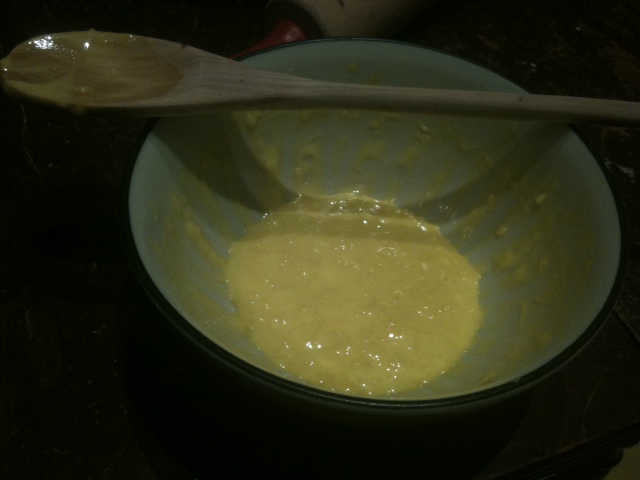
The best part of all this? I somehow, inexplicably, did the impossible and made beautiful thick aioli with only a bowl and a wooden spoon.
This was taken pre-paprika.
So, what is it? Cappellini noodles, tossed with olive oil and roasted to a toasty light brown. Then cooked in fish broth and topped with mussels, paprika, and garlic aioli.
I was on the fence about which seafood to use. The original recipe calls for neither, but it uses fish broth. Seafood broths usually only take a few minutes to make from scratch, and they're hard and expensive to find. Using shrimp would create a neat take on gambas al ajillo, but I like mussels better. Also, for some reason that doesn't even make sense to me, I find shrimp more viscerally disgusting to work with.
The results? Awesomely rustic, like something the little old rural ladies of Volver would make. The paprika, not normally my favorite spice, made it all come together perfectly. Next time, I'd pan-fry the noodles rather than roast, just for user-friendliness, and butter, instead of olive oil, might be interesting to try as well.
The best part of all this? I somehow, inexplicably, did the impossible and made beautiful thick aioli with only a bowl and a wooden spoon.
Subscribe to:
Posts (Atom)